If you’re wondering what age a child can start dance classes, most children can begin as early as age 2. At this stage, dance is playful, structured, and designed to help young children build confidence, coordination, and comfort in a group setting.
This guide is for families in Brighton, Michigan and nearby communities like Howell, Hartland, South Lyon, Pinckney, and across Livingston County who want a clear answer about when to start dance.
Below, we’ll explain what readiness looks like, what toddler dance classes involve, and how children grow through early movement experiences.
What age is best for a child’s first dance class?
Most children can begin dance classes around age 2, depending on their personality and comfort level in group settings.
At this age, classes are not about technique or perfection. They are designed to introduce movement, music, listening skills, and confidence in a gentle and encouraging way.
Signs your child may be ready for dance class
Your child may be ready if they can:
- Stay in a group setting for a short period of time
- Follow simple directions (even inconsistently)
- Enjoy music, movement, or imitation
- Show curiosity about new activities
What if my child isn’t ready yet?
That’s completely normal. Some children thrive at age 2, while others feel more comfortable starting at 3 or 4. Readiness depends more on personality and confidence than age alone.
The best starting point is simply the one where your child feels safe and curious.
What happens in a dance class for ages 2–3?
Dance classes for ages 2–3 are designed to feel playful, structured, and welcoming for first-time learners.
At this stage, the goal is not performance. It’s comfort, coordination, and early confidence building.
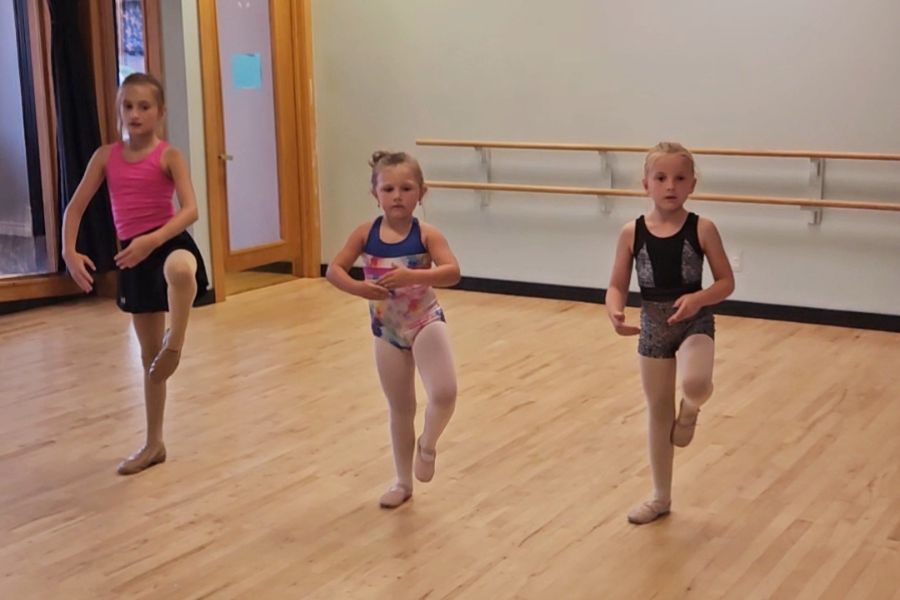
What toddlers do in class
In a typical beginner class, children may:
- March, jump, spin, and tiptoe
- Move to music through simple games and patterns
- Practice listening and following directions
- Learn to take turns and participate in a group
- Explore movement in a fun, low-pressure way
Classes usually follow a consistent routine so children can feel secure while they learn.
What if my child doesn’t participate right away?
This is one of the most common concerns for parents, and it is completely normal.
Some children walk in and immediately join in. Others prefer to observe first. Both responses are healthy and expected.
How participation usually develops
Over time, many children:
- Watch during the first class or two
- Begin joining small parts of activities
- Start participating more fully as the routine becomes familiar
- Gain confidence through repetition and comfort
At this age, learning often happens through observation before action.
What do young children gain from dance classes?
Even at age 2 or 3, dance classes support important developmental growth that extends beyond the studio.
Confidence and independence
Children learn that trying new things is safe and rewarding.
Coordination and movement skills
Dance builds balance, motor skills, and body awareness through repetition and play.
Listening and focus
Following music and teacher cues helps develop early attention and listening skills.
Creativity and expression
Movement gives children a healthy way to express energy, emotion, and imagination.
Social comfort and community
Group classes help children become comfortable interacting with peers in a structured environment.
How do teachers support shy or hesitant dancers?
It is very common for young children to feel shy in their first dance class.
A supportive classroom environment helps children adjust at their own pace without pressure.
How teachers help new dancers feel comfortable
Teachers often:
- Create a calm, welcoming environment
- Allow children time to observe before participating
- Encourage without pressure
- Celebrate small steps like joining the circle or trying one movement
- Support each child based on their comfort level
Most shy dancers begin to participate more confidently after a few consistent classes once the routine feels familiar.
What can parents do to help before the first class?
A few simple steps can make a big difference in helping your child feel ready.
You can:
- Talk about class in a positive, simple way
- Let them know it is okay to feel shy
- Practice basic movements at home like jumping or spinning
- Arrive a little early to help them settle in
- Keep goodbyes calm and confident
The goal is not to remove nerves, but to help your child feel safe trying something new.
Why dance is a great first activity for kids in Livingston County
Dance is often one of the first structured activities children experience, and it supports development in a well-rounded way.
For families in Brighton, Howell, Hartland, South Lyon, and Pinckney, dance offers a consistent weekly environment where children can grow socially, emotionally, and physically.
Long-term benefits of early dance exposure
Children build:
- Confidence through small achievements
- Coordination through movement practice
- Focus through structured routines
- Creativity through music and expression
- Social skills through group interaction
For many families, dance becomes a place where children grow into confidence naturally over time.
At Academy of Dance in Brighton, Michigan, beginner dancers are supported at every stage, with an emphasis on comfort, encouragement, and age-appropriate learning.
FAQs: Starting Dance Classes in Brighton, MI
What age can a child start dance classes?
Most children can start dance classes at age 2, depending on their readiness and comfort in group settings.
What happens in a dance class for 2-year-olds?
Classes include simple movement activities like jumping, marching, spinning, and following music with a teacher in a playful setting.
Is it normal if my child doesn’t participate right away?
Yes. Many children observe first and gradually join in once they feel comfortable and familiar with the routine.
How do I know if my child is ready for dance?
Readiness often includes curiosity about movement, comfort in short group settings, and willingness to follow simple directions.
Can beginners join even with no experience?
Yes. Beginner dance classes are designed for children with no prior experience and introduce everything step by step.
Ready to try a first dance class?
If you’d like to explore beginner dance options, you can join a free trial class or contact Academy of Dance in Brighton, MI to find the best fit for your child.